The term autism first was used by psychiatrist Eugen Bleuler in 1908. He used it to describe a schizophrenic patient who had traveled into his own world. In 1943 American child psychiatrist Leo Kanner studied 11 children. The children had features of difficulties in social interactions, difficulty in adapting to changes in routines, good memory, sensitivity, resistance and allergies to food, good intellectual potential, echolalia or urge to repeat words of the speaker and difficulties in random activity.
SIGNS AND SYMPTOMS OF AUTISM
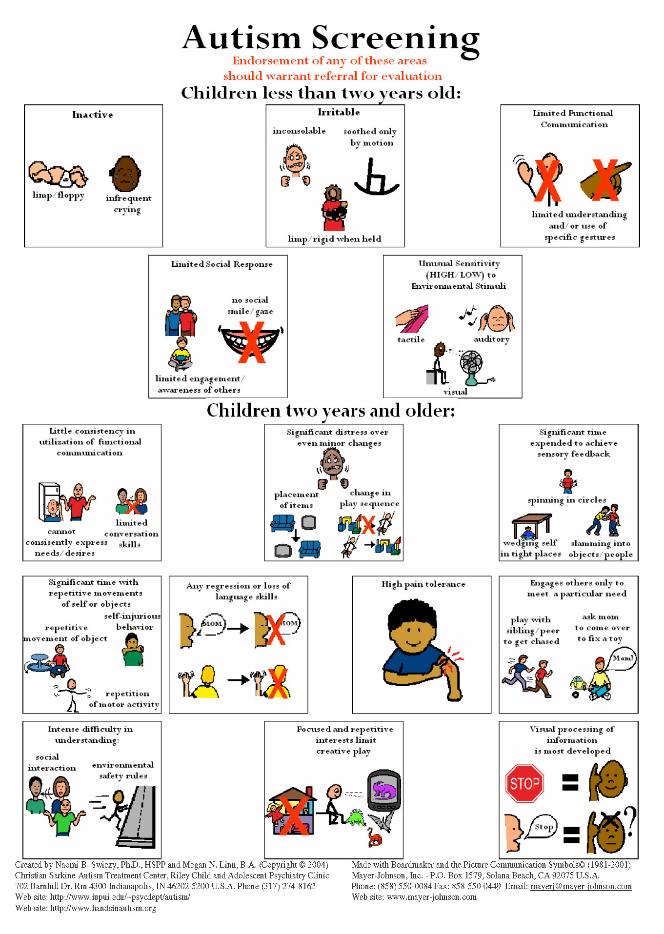
Some symptoms include inappropriate social interaction, poor eye contact, compulsive behavior, impulsivity, repetitive movements, self-harm, or constant repetition of words or actions. Another symptom is stacking or lining up objects.
THE SCIENCE BEHIND THE DISORDER
Autism tends to occur more frequently than expected among individuals who have certain medical conditions, including fragile X syndrome, tuberous sclerosis, congenital rubella syndrome and untreated phenylketonuria (PKU). Some harmful substances ingested during pregnancy also have been associated with an increased risk of autism.
THE PROGNOSIS
Some children with autism may improve at 4-6 years of age especially those with mild autism who have been treated at an early age. These children who improve may be able to include themselves among their normal peers. Current policy of inclusion within the education system helps to support the majority of ASD sufferers within mainstream schools. Autism is lifelong.It is also seen that reported cases of autism increased dramatically in the 1990s and early 2000s. This increase is largely attributable to improvements in diagnostic practices and public awareness. Other factors such as environmental toxins, advanced parental age at the time of pregnancy etc. may also be important.
THE CURE
Autism is not a curable disorder but is treatable. Autism is not curable because it is a genetic disorder and genetic disorders are incurable and that means you can't do blood test to find or cure it. You can treat Autism with certain medications.
CAN YOU SCREEN THE DISORDER?
You can screen this disorder but it is very difficult because there is no medical test like blood test which is usually used to diagnose disorders. The way you screen the disorder is by going to a asd specialist and then they diagnose the person with autism. You cant do a blood test because it is not a genetic disorder
THE FUTURE FOR AUTISM
it is unlikely to ever cure disorders like autism. It is unlikely to cure because it is a genetic disorder and it is usually passed by family generations. But you can cure autism using certain medications like antipsychotics.
THE STATISTICS BEHIND THE DISORDER
The statistics behind autism is that one in forty two boys have autism and one in one hundred and eighty nine girls have autism. Boys are five times more likely to be diagnosed with autism than girls. Autism is also one of the fastest growing genetic disorders.
INTERESTING FACTS
In the US, over one hundred thousand people have autism and it is rapidly growing. Autism also not only makes it harder to communicate, but it also can damage the nervous system.